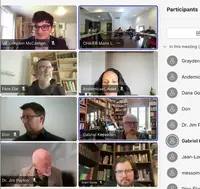
This May neighbors on Geddes 4 - the Jacques Maritain Center and the McGrath Institute for Church Life - participated in a variety of events devoted to the study of the ancient Church. Early in the month, the Maritain Center Communications Coordinator and research affiliate along with Dr. Grant Gasse of the McGrath Institute presented papers on the most ancient Doctor of the Church, Irenaeus of Lyons. The presentations were part of a larger celebration (taking place in Lyons and simulcast via the internet) of the 500th anniversary of the first modern edition of Irenaeus' magnum opus, Against Heresies, by Erasmus of Rotterdam in 1526. Discussion focused on the legacy of Irenaeus, including in Medieval figures like Thomas Aquinas and others.
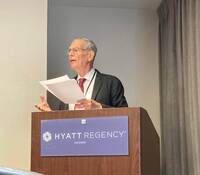
Just last week, the Center's work on early Christianity continued at the North American Patristics Society Annual Meeting in Chicago and the meeting of the Canadian Society of Patristic Studies/Association Canadienne des Études Patristiques meeting in Toronto. In Chicago, the Maritain Center and McGrath teamed up to organize a multi-session workshop on Irenaeus' use of Scripture and earlier Christian tradition. Papers included Dr. Gasse's study of the role of Mary and the virgin birth in Irenaeus' conception of inheritance. During the conference, Prof. John Cavadini, Director of the McGrath Institute, also presented a paper studying the relationship between reason and revelation in early Christian understandings of prophecy.
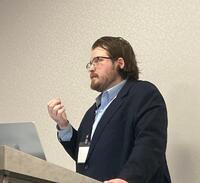
In Canada, the Center shifted to considering the relationship between philosophy and the makeup of early Christian communities. In early Christian writers, the belief that all persons, no matter their ethnic background, are made by the same God and endowed with the same capacities to believe, cultivate virtue, and live a life modelled after the life of Christ means that Christian communities are open to persons of all ethnicities. This type of logic can be found not only in the earliest Christian sources, but also in explicit calls for justice in the face of egregious abuses, such as Pope Paul III's 1537 Sublimis Deus, which condemns the enslavement of native peoples. The Center will continue to sponsor research into early Christianity at its upcoming workshop between researchers at Notre Dame, Lumen Christi, and University of Chicago. Details to follow later this month!