
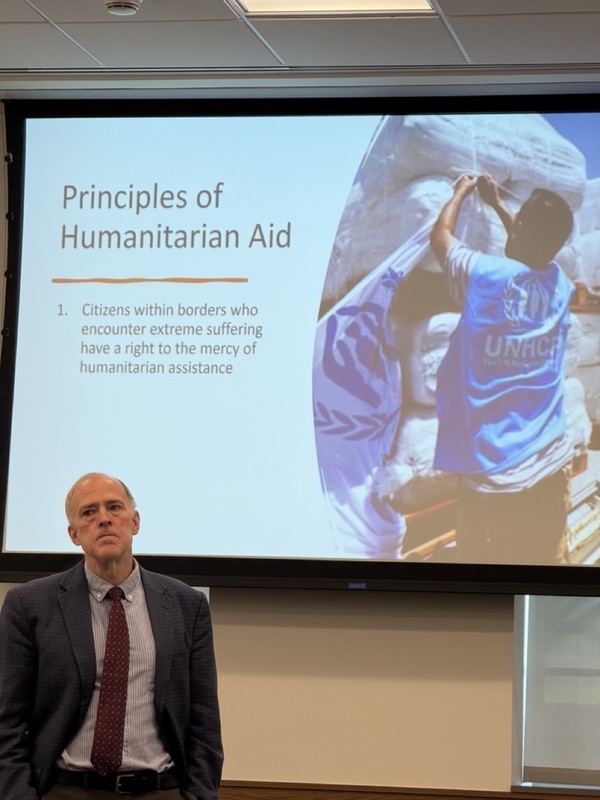
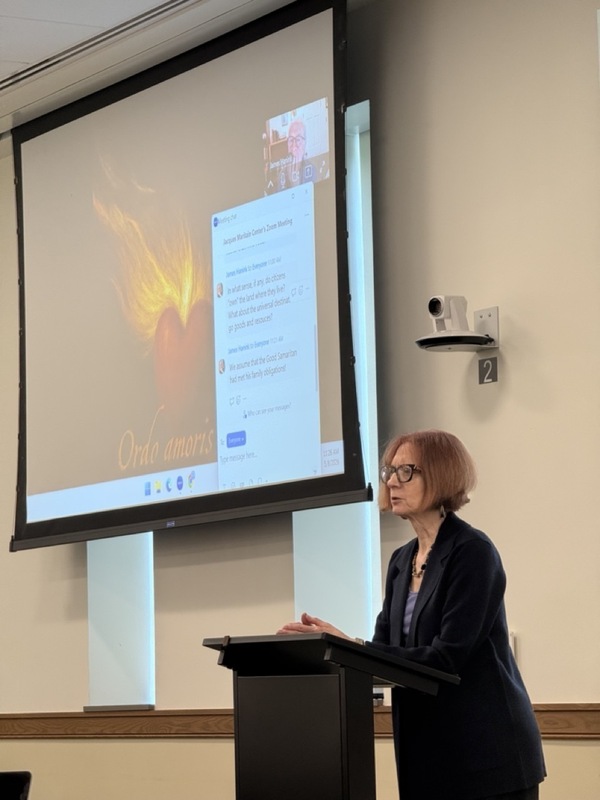
To close out this academic year's programming, the Maritain Center hosted a workshop titled, "The Ordo Amoris Revisited: Theological, Ethical, and Political Perspectives." Co-organized by Dr. Martin Hähnel and the Department of Philosophy at the University of Bremen, the workshop featured speakers from four different universities and six disciplines (Philosophy, Political Science, Ethics, Liberal Studies, Theology, History of Philosophy). These speakers, specialists on a wide range of traditions, examined classical and contemporary accounts of ordo amoris and its significance for today’s ethical and political challenges. The Center is grateful to the speakers and 50+ scholars who took time away from their end-of-year duties to join the discussion.
Explaining the importance of considering the Ordo amoris, the organizers wrote, "Obviously, the concept of ordo amoris—the 'order of love'—has deep roots in Western thought, from Augustine and Aquinas to Scheler and Spaemann. It concerns how love should be hierarchically ordered, granting higher priority to special relationships and objects. Yet it also raises a number of important questions."
Enumerating these challenges, they continued, "For one thing, it is unclear what the ordo amoris is. Does it describe a context-sensitive moral
rule, a hierarchy of values, the unity of virtues, or a form of moral triage. Is it objective or subjective, normative or descriptive? Does its hierarchy of love imply a certain hierarchy of duties? For another thing, a fundamental concept in Western thought, seminally illustrated by the Good Samaritan parable, is the Christian imperative to extend beneficence to all, regardless of the agent's personal ties. How has the Western tradition historically reconciled these two strains of thought, one recommending partiality and the other recommending impartiality? For instance, Thomas Aquinas argues that while love should be universal, it is necessarily expressed unequally in practice. Yet he also asserts that our preferences for those to whom we have stronger ties must be set aside in cases of a stranger's more urgent need. How should we understand the relationship between these two claims? How should we think about reconciling these two strands of thought today?"
The workshop considered not only these questions, but also a range of issues pertaining to applying the Ordo amoris in difficult contexts.
For a full abstract and list of speakers, visit the event page.
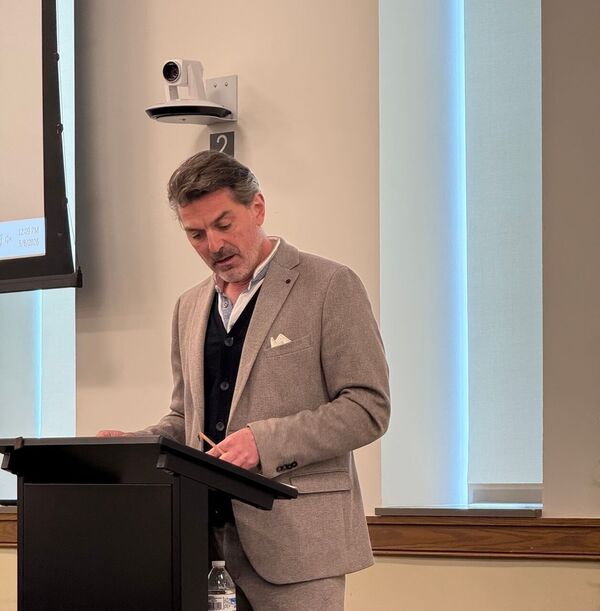
Otto-Friedrich-Universität Bamberg), "Hegel on Love"